
The Central Texas Roof Maintenance Checklist (Spring & Fall)
Twice-a-year habits that add years to a roof in our heat, hail, and wind.
By the Apex Roofing team · Central Texas
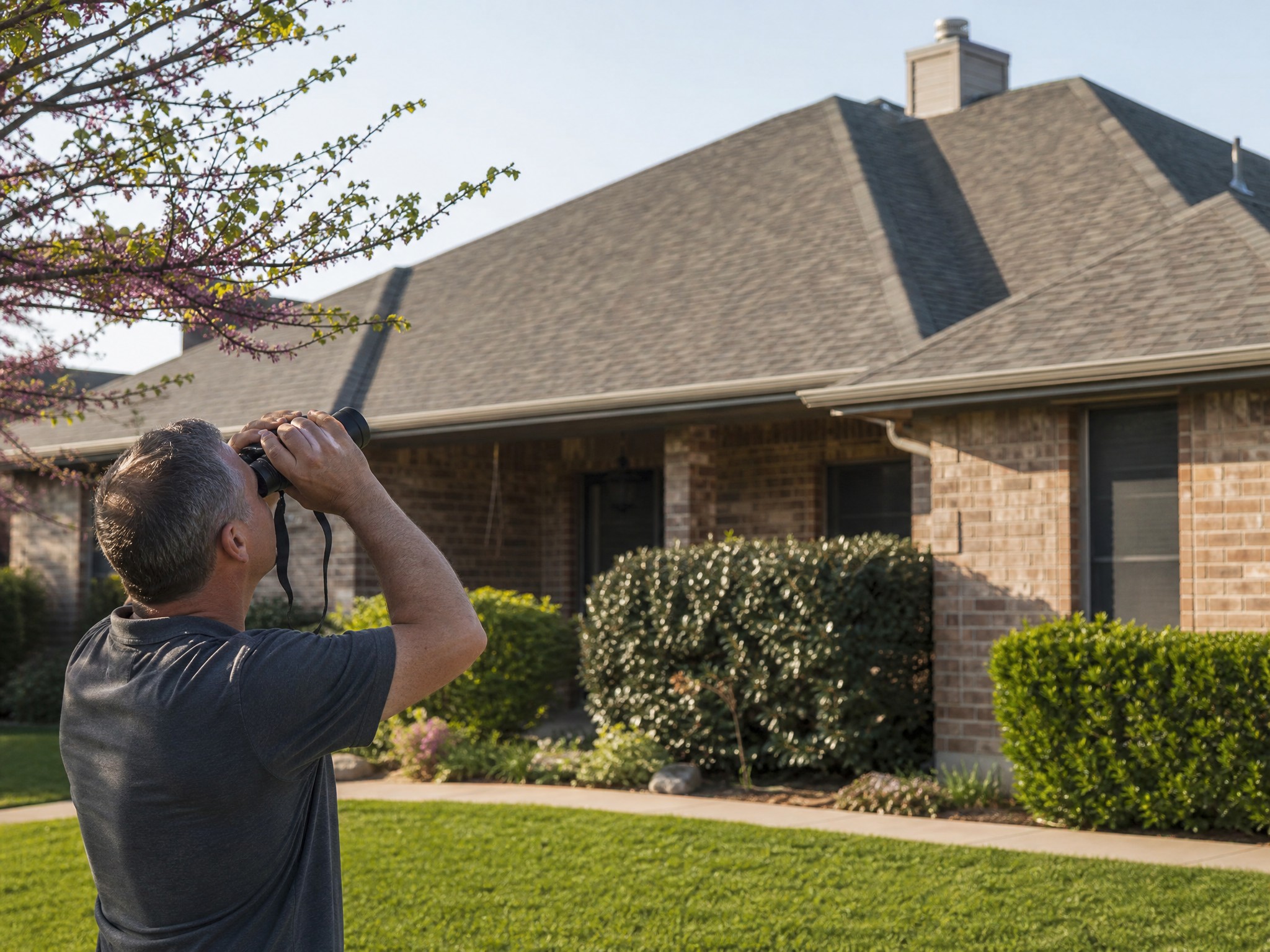
A roof in Central Texas works harder than most. Between the August sun baking the shingles past 150 degrees on the surface, the spring hail that rolls up from the Hill Country, and the gusty northers that arrive every fall, our roofs take a beating that a roof in a milder state never sees. The good news is that a little routine attention goes a long way. Homeowners in Temple, Belton, and Killeen who walk their property twice a year tend to get the full lifespan out of their roofs, while the ones who never look up are the ones we meet after a leak has already soaked the drywall.
This checklist splits the work into a spring pass and a fall pass. Most of it you can do from the ground with a pair of binoculars and ten minutes. None of it requires climbing on the roof, which we never recommend for homeowners anyway.
Spring checklist (March to May)
Spring is hail season here, so the spring pass is about catching storm damage and getting ahead of summer heat.
- Walk the yard after every hailstorm and look for granules washed to the base of downspouts.
- Scan the roof with binoculars for bruised, cracked, or missing shingles.
- Check soft metal first. Dented gutters, vents, and the AC condenser fins confirm a hail event even when the shingles look fine.
- Look at the ceilings inside, especially in closets and the corners of upstairs rooms, for fresh water stains.
- Clear winter leaf litter out of valleys and gutters so spring rain drains freely.
Fall checklist (September to November)
Fall is about preparing for cooler, wetter weather and the occasional ice event that catches Central Texas off guard every few winters.
- Clean the gutters and downspouts fully. Live oaks and pecans drop heavily here, and clogged gutters back water under the shingle edge.
- Trim back limbs that overhang the roof. Cedar and oak branches scrape granules off and drop debris into valleys.
- Check the caulking and sealant around vent pipes, chimneys, and skylights for cracks.
- Look at the attic on a sunny day. Daylight coming through the decking means a gap that water will find.
- Confirm attic insulation has not shifted away from the eaves, which invites condensation in cold snaps.
What homeowners miss most often
The single most overlooked problem we find is flashing. Flashing is the thin metal that seals the joints around chimneys, walls, and valleys, and it fails long before the field of shingles does. When a roof leaks on a five-year-old roof, the culprit is almost always flashing or a cracked pipe boot, not the shingles themselves. A quick look at those transition points during each seasonal pass saves a lot of trouble.
The second most common miss is gutters. A gutter full of pecan debris does not just overflow. It holds water against the fascia and the bottom row of shingles, which rots wood and lifts the edge of the roof over time. Two cleanings a year keeps that water moving where it should.
When to call a professional
If your ground inspection turns up missing shingles, visible sagging, daylight in the attic, or any interior water stain, it is time for a professional look. A pro can safely walk the roof, document what they find with photos, and tell you whether a simple roof repair handles it or whether the roof has reached the end of its service life. After a significant storm, a professional storm damage inspection is worth scheduling even when the roof looks untouched, because hail bruising rarely shows from the ground.
The payoff of staying ahead
Roofs almost never fail without warning. They give signs for months, sometimes years, before a leak shows up on the ceiling. Homeowners in Temple and across Central Texas who build these two passes into their spring and fall routine catch those signs early, spend far less on repairs, and reach the full warranty life of their roof. The checklist costs you twenty minutes a year. A surprise leak costs a lot more.
Related articles
Want a second set of eyes on your roof?
Our free 21-point inspection catches the small problems before they turn into ceiling stains.